Wednesday, April 25, 2007
Neolithic Revolution

Monday, April 23, 2007


Tuesday, April 17, 2007
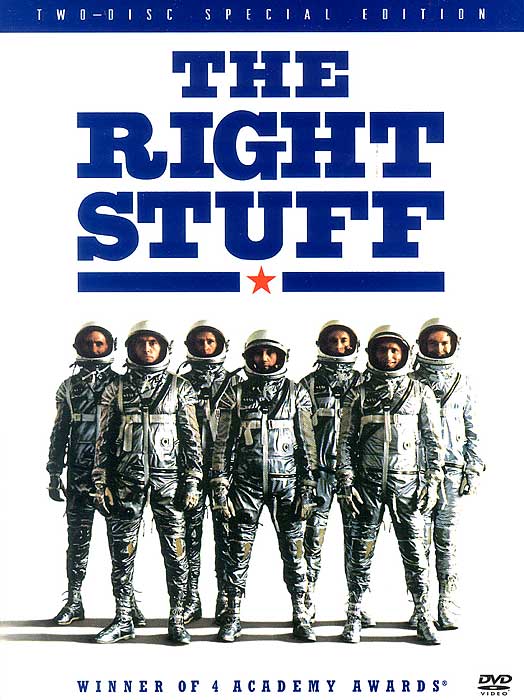
Film Lesson - " The right stuff "

Friday, April 13, 2007
cuban missile crisis

Wednesday, April 11, 2007
NATO and the Warsaw Pact

Saturday, March 24, 2007
Film Lesson: "Night and Fog"

Some of my reactions to "Night and Fog" were, surprised, sorry for the jews. Yes, i did find the film as powerful as you did, because the scenes were so dramatic and it was all true and it was so eye popping and it was like you can hardly belive it. The scenes in Schindler's List were not as powerful as the one in "Night and Fog" because first you already know that Schindler's List is just a really great movie and the scenes were not as dramatic but in the film "Night and Fog" you know that these scenes are real and that they really happened and also how they treated the bodies and cut the heads off and used the fat to make soap and used the hair as wool and the Nazi's still kept all of the belongings from the jews it was so horrifying but also it shows what the jews had to go through. I think that the documentary illustrates the Holocaust more effectively than the Hollywood version because the documentary is REAL stuff.
Film Lesson: "Schindler's List"

The film, Schindler's list, illustrated the Holocaust because it shows how the Nazi's tried to annihilate the jews during world war 2. the Nazi's were brutal mean and extremely harsh. the separated the children from their mothers and killed them all so they do not reproduce a new jewish population. the scenes that were most powerful to me as a viewer is The liquidation of the Krakow ghetto, because when the Nazi's rampaged through the ghetto, the Nazi's killed thousands of jewish people. who ever they found that was jewish was shot over 20 times. useful workers were shot like they were nothing. people that were found hiding were shot and killed with their family with no thinking what wrong they did or what did they do to deserve this. Because of Adolf Hitlers sick twisted mind millions of jews were killed. the images from the film will stay with me are the images of the children being taken away from their parents. I felt very sorry for the parents and especially the children because the children didn't do anything wrong to deserve what happened to them.
US Atomic Bombing of Japan in 1945

i do agree that the US Atomic Bombing of Japan is the #1 news story of the century, because it was the most deadliest thing that ever happened at that time and also affected the future due to the radiation, the radiation affected birth and breathing problems which killed many other of Japaneses people. I think that the lucky ones died due to the impact of the atomic bombing, because the people that died after 10 years are the ones that suffered and went through the most, because they witnessed the bombing and they still survived and got sick and went through a lot of pain. i don't think their was anything bigger than the atomic bombing of japan in that century. I wouldn't add anything to the list of top 100 news stories of the century, i would probably change the orders of a few things.
Thursday, March 15, 2007
Germany at War - WW II

prop·a·gan·da:
| 1. | information, ideas, or rumors deliberately spread widely to help or harm a person, group, movement, institution, nation, etc. |
| 2. | the deliberate spreading of such information, rumors, etc. this poster is talking about the war that Germany was in. Germany attacked other communist country's. although Adolf Hitler was not German he lived in Germany. Hitler hated the jews. people that hated the jews were called Nazis. |
Tuesday, February 13, 2007
Film lesson Gandhi
Wednesday, January 10, 2007
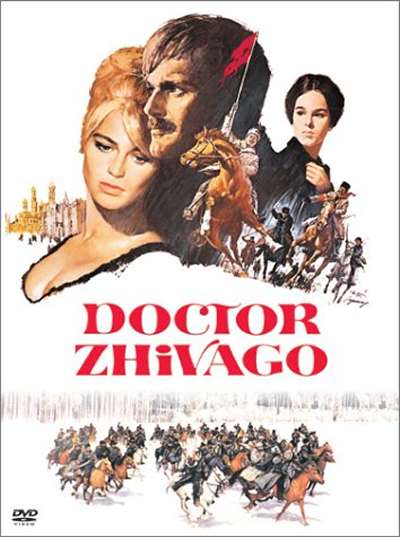
Film Lesson: "Dr. Zhivago"

The film Dr. Zhivago depict the Russian Revolution, because the movie takes place during the Russian revolution and also talks about how Russia became a communist country. The Russian people wanted change because the were getting slaughtered by the king Czar the second, and also the Russian people were dying of hunger, which they didn't like. the film also depict communism
because when Dr.Zhivago came back to his house he found a bunch of people like about 20 people
where there and Dr.Zhivago had to share his house because it was big and he was wealthy. (not all the people liked the idea of communism, because some people work really hard to get up to what the have).
<- Film Dr.Zhivago
Monday, December 11, 2006
Film Lesson: "Mountains of the Moon"
This lake is one of the top 5 most largest lake in the world. the summary of this movie about Captain Richard Francis Burton's and Lt. John Hanning Speke's expedition to find the source of the Nile river in the name of Queen Victoria's British Empire. The film tells the story of their meeting, their friendship emerging amidst hardship, and then dissolving after their journey.
Tuesday, December 05, 2006
The Meiji Restoration of Japan
Matthew Perry "bullied" the Japanese into signing a trade treaty, by trading them drugs instead of regular items that they can acctually use, the british people traded a sort of drug called "opium" for tea. opium is a type of herione.it is made of a pesial type of poppy seeds, and they are boiled until a type of gooey stuff comes out of it. ( then the smoke it till they get high. )
so then they got addicted to the drug and kept on trading all their tea.
eventualy the british one and they got their ways.
quote: "
ITEM A: Capt. Elliot to the opium traders, March 27, 1839
I, Charles Elliot, Chief Superintendent of the trade of British subjects to China, presently forcibly detained by the provincial government, together with all the merchants of my own and the other foreign nations settled here, without supplies of food, deprived of our servants, and cut off from all intercourse with our respective countries . . . have now received the commands of the High Commissioner [Lin Tse-hsu] . . . to deliver into his hand all the opium held by the people of my own country.Now I . . . do hereby, in the name and on the behalf of Her Britannic Majesty's Government, enjoin and require all Her Majesty's subjects now present in Canton, forthwith to make a surrender to me for the service of Her said Majesty's Government, to be delivered over to the Government of China, of all the opium under their respective control: and to hold the British ships and vessels engaged in the opium trade subject to my immediate direction: and to forward me without delay a sealed list of all the British owned opium in their respective possession. And I . . do now in the most full and unreserved manner, hold myself responsible for, and on the behalf of Her Britannic Majesty's Government, to all and each of Her Majesty's subjects surrendering the said British owned opium into my hands, to be delivered over to the Chinese Government. And I . . .do further caution all Her Majesty's subjects here present in Canton, owners of or charged with the management of opium the property of British subjects, that failing the surrender of the said opium into my hands at or before six o'clock this day, I, . . hereby declare Her Majesty's Government wholly free of all manner of responsibility in respect of the said British owned opium.
And it is specially to be understood that proof of British property and value of all British owned opium, surrendered to me agreeable to this notice, shall be determined upon principles, and in a manner hereafter to be defined by Her Majesty's Government.
[Ref: British Parliamentary Papers, 1840, XXXVI
japan also had moderinized into a wealthy country, by trading with people all over the world,and they kept gathering natural resources until they achived what they had to.
archipelago: means, n. pl. ar·chi·pel·a·goes or ar·chi·pel·a·gos
- A large group of islands: the japanese archipelago.
- A sea, such as the Aegean, containing a large number of scattered islands.
Monday, November 13, 2006
Karl Marx and the Industrial Revolution

Philosopher Karl Marx believed he had discovered the key to history: Capitalism would be over-ruled by communism and oppressed workers would finally be free. but that did not work. Karl Marx invented something called communisim.
communisim is when every body is equal, they must be treated equally, they must be paid equally, and they must all work equally. but communisim did not always happen, because in people dont put much effort in their work, and the people that do put effort in there work they still get paid the same amount and some people didnt think that was fair.
(above) Karl Marx
Wednesday, November 08, 2006
Film Lesson: "Modern Times"

The movie called "modern times" is a movie about the industrial reveloution. Charlie Chaplin
the main character of the movie was playing a man who was being over worked in a factory.
Chaplin's view of industry and the Industrial Revolution was kind of disgusted by the whole idea and was looking... for lets just say "justice". He wanted out he didnt want to stay in the factory being over worked day after day and getting paid about a dollar a day. After that scene he was looking for a way to chage the industrial reveloution, but eventually he fails.
Industrial Revolution - Child Labor

Child labor in the industrial reveloution was a very hard time in the 19th century. Children
between 10-12 were working 14-16 hours a day and they were only paid as much as 10 cents a day, because it was (for the owners of the factory) better to hire children to work in the factorys because they were smaller and if they had to reach into a big macine it would be easier for them to do that, because they were smaller. And also because they paid grown men more money, that is another reason why they paid children, because they would accept fewer amount of money.
captions by Lewis W. Hine.
what they did to stop child labor the they were sevral laws passed.
heres ALL of them :
The 1819 Factory Act : no children under 9 to work in factories. Children from 9 to 16 allowed to work a maximum of 72 hours per week with one and a half hours a day for meals.
1833 Althorp`s Factory Act : children from 9 to 13 to work a maximum of 42 hours per week; also children aged 13 to 16 to work a maximum of 69 hours a week. No night work for anybody under the age of 18.
1842 Mines and Colleries Act : banned all women and children under 10 from working underground. No-one under 15 years was to work winding gear in mines.
1844 Graham`s Factory Act : minimum age for working in factories reduced to 8 years old. 8 to 13 years old to work a maximum of six and a half hours a day. 13 to 18 year olds to work a maximum of 12 hours a day and the same applied to women. Safety guards had to be fitted to all machines.
1847 Fielder`s Factory Act : 10 hour day introduced for under 18's and for women.
There were factory inspectors to 'enforce' these laws but they were so poorly paid, they were easily bribed. Also many working parents were desperate for money and they lied about the ages of their children to get them work in factories and mines. So the laws may have been good in theory, they were very difficult to enforce.
Industrial Revolution - Inventions